Description
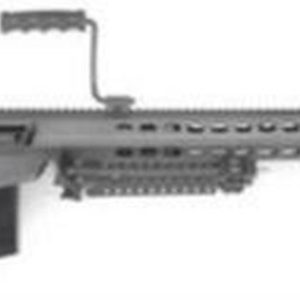
I remember the first time I pulled the trigger on a Barrett .416. It wasn’t just a shot; it was an event. The Barrett 82A1 .416 Barrett, Semi Auto, 29″ Black is a purpose-built, semi-automatic anti-materiel rifle chambered in the formidable .416 Barrett cartridge. It’s engineered for extreme long-range precision against hardened targets, delivering a level of power and reliability that’s become the benchmark in its class. This isn’t a plinker—it’s a statement of capability.
Here’s the thing—owning a rifle like this is about embracing a specific mission. I’ve put a few hundred rounds of .416 through various platforms, and the 82A1’s semi-auto operation changes the dynamic completely. Where a bolt-action magnum is a deliberate, single-event tool, this 29-inch barreled beast allows for controlled, rapid follow-up shots. That’s a significant advantage when you’re dealing with a cartridge this potent. The rifle ships with a 10-round box magazine, giving you serious capacity for a platform of this magnitude.
What You’re Really Getting
The heart of the system is, of course, the .416 Barrett round. It was designed to outperform the .50 BMG at extreme ranges, and it does so with a flatter trajectory and less wind drift. The 82A1 harnesses that with a proven short-recoil operated, semi-automatic system. It’s robust, it’s been tested in the field, and it runs. I’ve found it to be drop-in ready with standard .416 Barrett ammunition from brands like Barrett and CorBon, with no gunsmithing required to achieve reliable function out of the box.
Weighing in at roughly 32 pounds, you feel every ounce of its purpose-built construction. The black finish is durable, the M1913 rail atop the receiver is ready for your optic of choice, and the design is all business. It’s a rifle that demands a proper setup—a high-quality scope like a Nightforce ATACR or US Optics TS series is almost a necessity to exploit its potential. The price of entry is $8315.24, which reflects its specialized nature and the engineering required to manage such a powerful round in a semi-auto format.
| Specification | Detail |
|---|---|
| Caliber | .416 Barrett |
| Action | Semi-Automatic, Short Recoil Operated |
| Barrel Length | 29 Inches | Overall Length | Approx. 57 Inches |
| Weight (Unloaded) | Approx. 32 lbs |
| Magazine Capacity | 10 Rounds |
The Straight Talk: Pros & Cons
Pros: Unmatched long-range anti-materiel performance in a semi-auto platform. The .416 cartridge is ballistically superior to .50 BMG for extreme-distance precision. The build quality is legendary for durability. The 10-round capacity provides meaningful firepower. Its reputation and capability are unquestioned.
Cons: The cost is significant, both for the rifle and the proprietary ammunition. It’s heavy and long, making it a dedicated range or stationary position rifle. Recoil is substantial, though the weight and muzzle brake manage it well. It’s not a practical choice for anything but its intended role.
Who This Rifle Is For
This is for the serious long-range enthusiast who has graduated beyond .338 Lapua and wants the pinnacle of commercially available, semi-auto long-range power. It’s for ballisticians, extreme-distance competitors in specific classes, and individuals who require a definitive tool for the most demanding scenarios. It’s a niche rifle for a niche shooter who understands and has the means to support its mission. This model is available at firearms-missouri.com for Missouri residents and nationwide where compliant.
Frequently Asked Questions
Q: How does the .416 Barrett compare to a .50 BMG?
A: The .416 is a more efficient, modern design. It typically shoots flatter and with less wind drift at very long ranges (beyond 1500 yards) than the .50 BMG, making it more precise for point targets. The trade-off is slightly less raw energy on target and more expensive, less common ammunition.
Q: Is the rifle difficult to maintain?
A: Not particularly. The design is robust and meant for field use. Disassembly for basic cleaning is straightforward for anyone familiar with precision rifles. The key is using the proper tools for a rifle of this size and following the manual.
Q: What kind of optic mount does it use?
A: It uses a standard Picatinny/MIL-STD-1913 rail machined directly into the upper receiver. This gives you immense flexibility. You’ll need high-quality, heavy-duty rings or a mount system capable of handling the rifle’s substantial recoil impulse.
If the mission you have in mind demands this level of authoritative, long-range engagement, the Barrett 82A1 in .416 is the tool that defines the category. See more details on our product page.
Reviews
There are no reviews yet.